
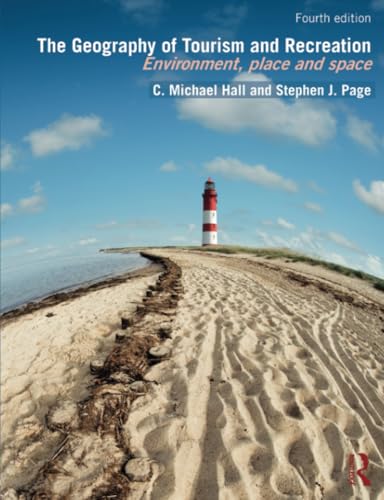
Geography of tourism and recreation environment, place and space C. Michael Hall, Stephen J. Page.
Material type: TextPublication details: New York Routledge 2014Edition: 4th edDescription: xii, 458 p. ill. 26 cm. PBContent type:
- text
- unmediated
- volume
- 9780415833998
- 338.4791 23
- G155.A1 H343 2014
- 338.4791
- SOC015000 | SPO000000 | TRV000000
| Cover image | Item type | Current library | Home library | Collection | Shelving location | Call number | Materials specified | Vol info | URL | Copy number | Status | Notes | Date due | Barcode | Item holds | Item hold queue priority | Course reserves | |
|---|---|---|---|---|---|---|---|---|---|---|---|---|---|---|---|---|---|---|
 Books |
Central Library | 338.4791 (Browse shelf(Opens below)) | In process | 223650 |
"This new edition builds on the model of success established in the previous editions, by providing students with a comprehensive introduction to the interrelationship between tourism, leisure and recreation from geographical and social science perspectives. It still remains the only book to systematically compare and contrast in a spatial context, tourism and recreation in relation to leisure time. It therefore offers insight into the demand, supply, planning, destination management and impacts of tourism and recreation.This fourth edition has been significantly updated to reflect recent developments and new concepts from geography which are beginning to permeate the tourism and recreational field, whilst retaining its accessible style and approach. The 4th edition features:New content on climate change, sustainability, mobilities and crisis management in time and space as well as recent trends such as low cost airlines and the control of land transport by transnational operators in the EU such as Arriva.More attention to management issues such as innovation and the spatial consequences for tourism and leisure development.New case studies & examples to showcase real life issues, from both developed and developing countries, especially US , China & South Africa.User-friendly to students, it is completely revised and redeveloped to accommodate new case studies, insights, summary points and learning objectives.Written by leading academics, this is essential reading for is essential reading for all Tourism, Geography, Leisure and Recreation students. "-- Provided by publisher.
"This fourth edition of The Geography of Tourism and Recreation provides students with a comprehensive introduction to the interrelationship between tourism, leisure and recreation from geographical and social science perspectives. It still remains the only book to systematically compare and contrast in a spatial context, tourism and recreation in relation to leisure time, offering insight into the demand, supply, planning, destination management and impacts of tourism and recreation. Whilst retaining its accessible style and approach this edition has been significantly updated to reflect recent developments and new concepts from geography which are beginning to permeate the tourism and recreational field. New features include: - Content on the most recent developments, climate change, sustainability, mobilities and crisis management in time and space as well as trends such as low cost airlines and the control of land transport by transnational operators in the EU such as Arriva. - More attention to management issues such as innovation and the spatial consequences for tourism and leisure development. - New case studies and example?? ?? ?? ??
There are no comments on this title.